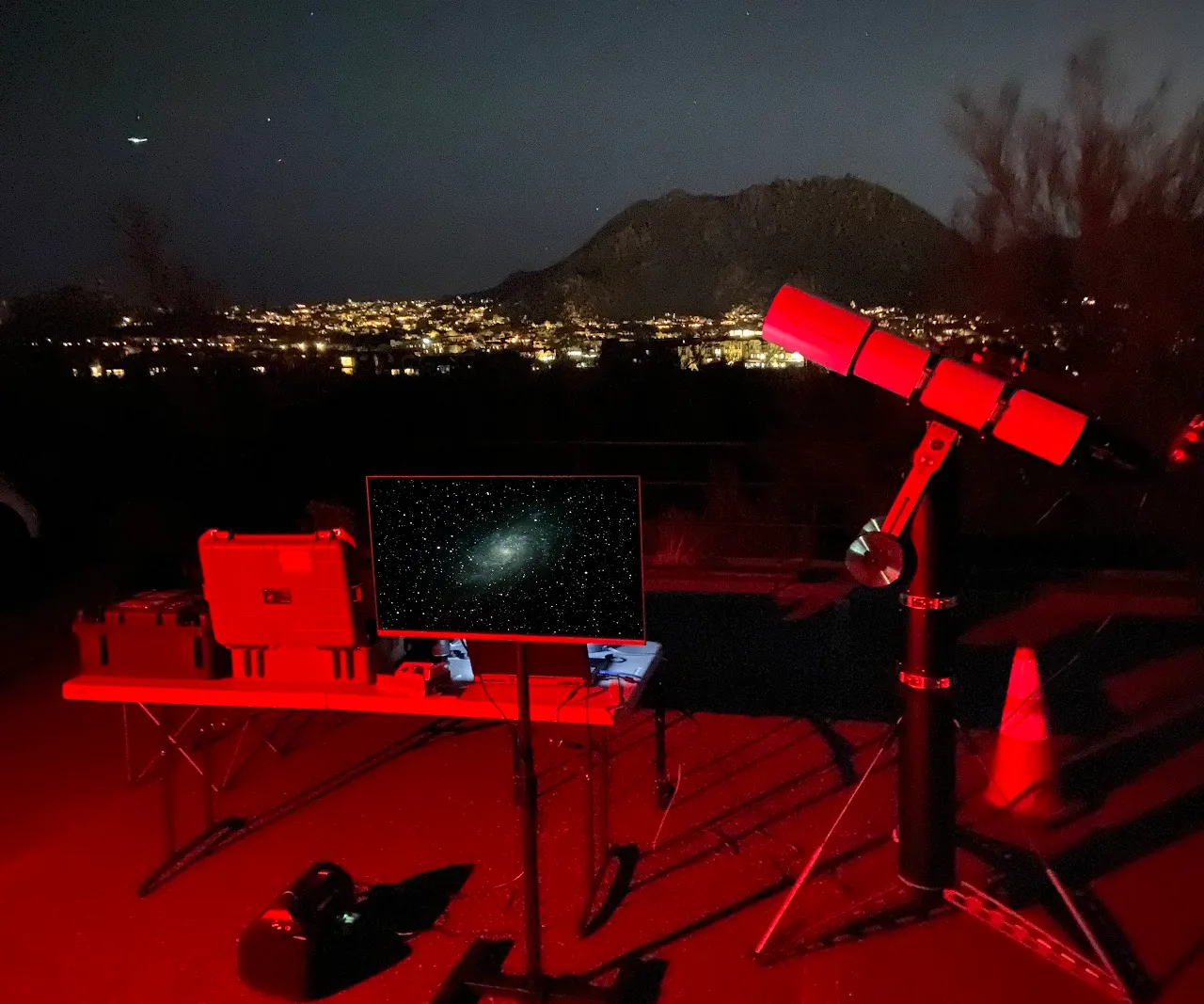
What Can Star Tours Do for You?
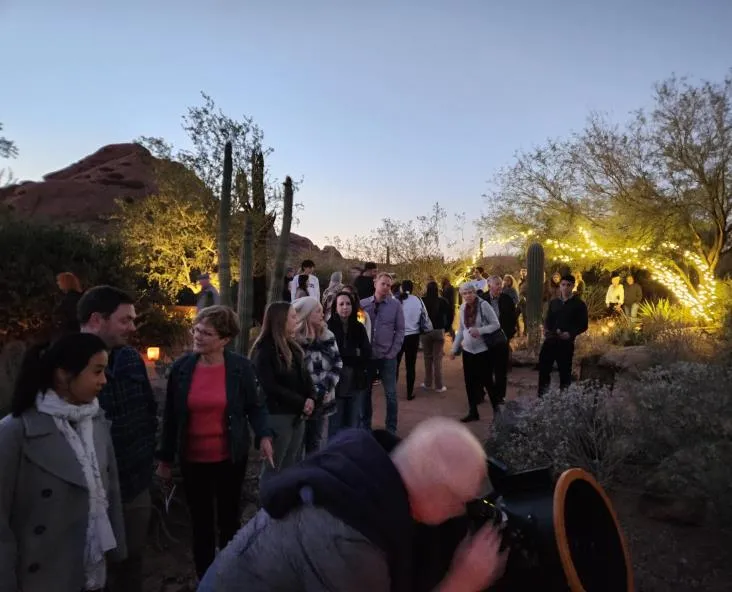
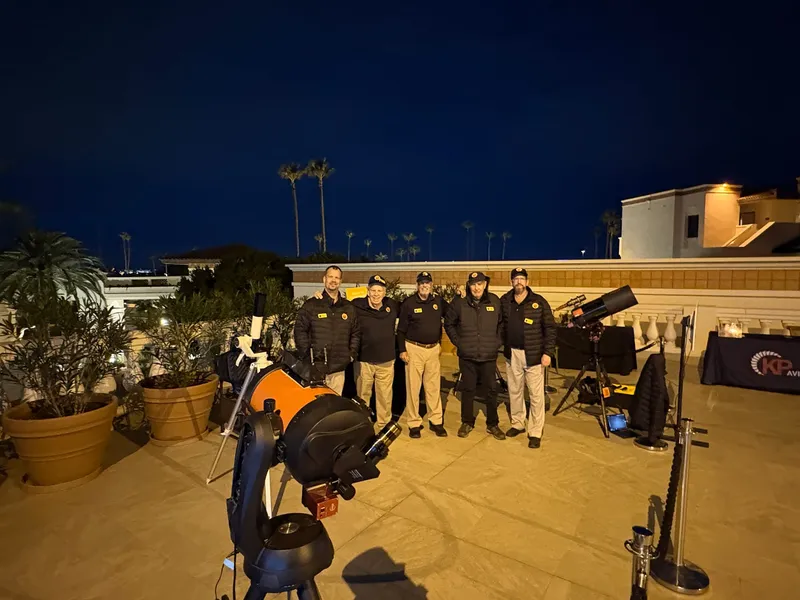
PAS performs community outreach for public and private groups alike — star parties, educational events, celebrations, and corporate events — brought to you by amateur astronomers with excellent telescope operation and presentation skills.
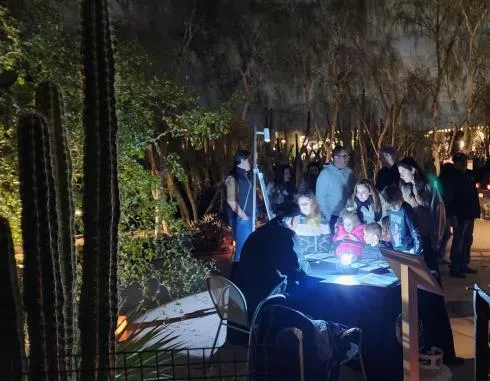
Book an EventThese events are offered for a fee based on the type of event, the number of operators/presenters, and the duration of the event. A standardized Star Tours event is two hours, but longer events are welcomed. Our team provides their own telescopes, observing equipment, and materials; larger groups may occasionally require some power or A/V support at the venue.
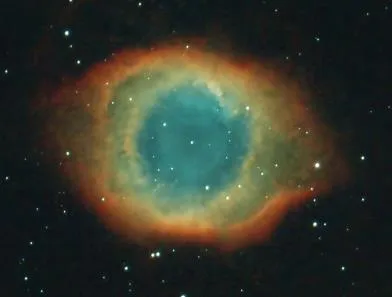
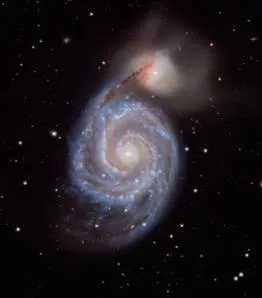
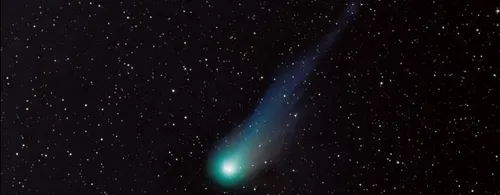
A few examples of what guests may see through the eyepiece or on-screen.
Program Offerings
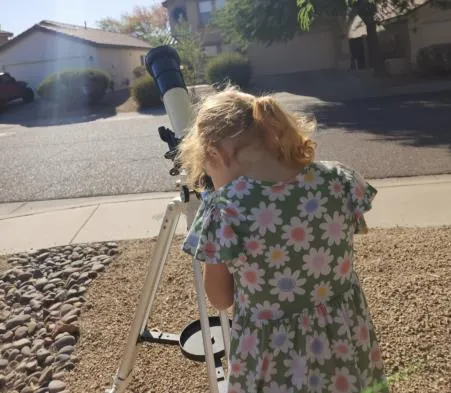
A Visual Telescope Operator
The personal connection of viewing one-on-one through the eyepiece — an inky black sky covered in shimmering stars, like diamonds on velvet.
- • A telescope fitted with an eyepiece, letting each guest observe the target individually.
- • The operator sets up an hour early, then acquires, focuses, and tracks targets throughout the event.
- • The operator educates guests on what they’re looking at, and answers astronomy questions in the queue.
- • Popular targets include the moon, planets in our solar system, star clusters, asterisms, bright reflection and emission nebulae, and large galaxies.
- • Each visual telescope can entertain and educate up to 30 guests with limited wait times.
- • Typical events view 5–6 targets depending on guest count, light pollution, clouds, and time of year — smaller groups may see up to 15.
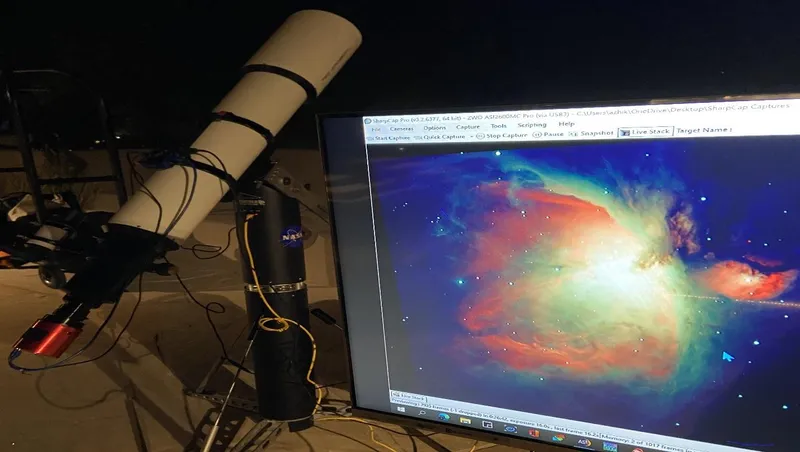
An Electronically Assisted (EAA) Operator
Everyone views at once, easy for young and old alike — with more color and more detail on fainter objects than the eye alone can see.
- • A high-resolution astronomy camera presents the telescope’s live view on a large monitor, so a whole group can watch together.
- • The operator sets up an hour early, then acquires, focuses, and tracks targets throughout the event.
- • The operator educates viewers on what they’re looking at, and answers astronomy questions.
- • Popular targets include the moon, planets in our solar system, star clusters, colorful nebulae, and galaxies — with visible detail like spiral arms.
- • Each EAA telescope may handle up to 40 guests, seated or standing in front of the monitor.
- • Typical events include views of 12–15 targets.
Sample Targets by Month
The night sky's deep-sky objects — nebulae, star clusters, galaxies, and double stars — return to the same part of the sky every year, so here's a sense of what a Star Tours event might show depending on the season. (Planets and comets aren't included here since their visibility shifts from year to year.) Rise and set times are approximate for the early-to-mid part of each month and will drift by a few minutes a day as the month goes on.
January
| Name | Type | Constellation | Magnitude | Apparent Size | Rise | Set |
|---|---|---|---|---|---|---|
| M1 (Crab Nebula) | Supernova Remnant | Taurus | 8.4 | 6' x 4' | 4:30 PM | 6:30 AM |
| M42 (Orion Nebula) | Emission Nebula | Orion | 4.0 | 60' x 60' | 5:30 PM | 4:00 AM |
| NGC 2392 (Eskimo Nebula) | Planetary Nebula | Gemini | 9.2 | 0.8' | 5:00 PM | 9:00 AM |
| NGC 7662 (Blue Snowball) | Planetary Nebula | Andromeda | 8.3 | 0.5' | 4:00 AM | 11:30 PM |
| M31 (Andromeda Galaxy) | Spiral Galaxy | Andromeda | 3.4 | 180' x 60' | 11:00 AM | 2:00 AM |
| M33 (Triangulum Galaxy) | Spiral Galaxy | Triangulum | 5.7 | 70' x 40' | 9:00 PM | 4:00 AM |
| M81 & M82 (Bode's Galaxy) | Galaxies | Ursa Major | 6.9 & 8.4 | 21' x 10' & 11' x 4' | 7:30 PM | 11:00 AM |
| Double Cluster (NGC 869/884) | Open Cluster | Perseus | 4.3 & 4.4 | 30' | N/A | N/A |
| M35 | Open Cluster | Gemini | 5.3 | 28' | 5:00 PM | 7:30 AM |
| M36 | Open Cluster | Auriga | 6.0 | 12' | 4:00 PM | 6:30 AM |
| M37 | Open Cluster | Auriga | 5.6 | 24' | 4:00 PM | 6:30 AM |
| M38 | Open Cluster | Auriga | 6.4 | 21' | 4:00 PM | 6:30 AM |
| M41 | Open Cluster | Canis Major | 4.5 | 38' | 7:30 PM | 5:30 AM |
| M44 (Beehive Cluster) | Open Cluster | Cancer | 3.1 | 95' | 7:30 PM | 9:00 AM |
| M45 (Pleiades) | Open Cluster | Taurus | 1.6 | 1.5° | 2:00 PM | 4:30 AM |
| NGC 457 (Owl Cluster) | Open Cluster | Cassiopeia | 6.4 | 13' | N/A | N/A |
| Achird (Eta Cassiopeiae) | Double Star | Cassiopeia | 3.5 / 7.5 | 12' | N/A | N/A |
| Castor | Double Star | Gemini | 1.6 | 5" | 5:30 PM | 9:00 AM |
February
| Name | Type | Constellation | Magnitude | Apparent Size | Rise | Set |
|---|---|---|---|---|---|---|
| M1 (Crab Nebula) | Supernova Remnant | Taurus | 8.4 | 6' x 4' | 1:30 PM | 3:30 AM |
| M42 (Orion Nebula) | Emission Nebula | Orion | 4.0 | 60' x 60' | 2:30 PM | 3:00 AM |
| NGC 2392 (Eskimo Nebula) | Planetary Nebula | Gemini | 9.2 | 0.8' | 3:00 PM | 5:00 AM |
| NGC 7662 (Blue Snowball) | Planetary Nebula | Andromeda | 8.3 | 0.5' | 6:00 AM | 10:30 PM |
| M31 (Andromeda Galaxy) | Spiral Galaxy | Andromeda | 3.4 | 180' x 60' | 9:30 AM | 10:30 PM |
| M33 (Triangulum Galaxy) | Spiral Galaxy | Triangulum | 5.7 | 70' x 40' | 9:00 AM | 12:05 AM |
| M81 & M82 (Bode's Galaxy) | Galaxies | Ursa Major | 6.9 & 8.4 | 21' x 10' & 11' x 4' | N/A | N/A |
| Double Cluster (NGC 869/884) | Open Cluster | Perseus | 4.3 & 4.4 | 30' | N/A | N/A |
| M35 | Open Cluster | Gemini | 5.3 | 28' | 1:30 PM | 5:00 AM |
| M36 | Open Cluster | Auriga | 6.0 | 12' | 12:30 PM | 4:30 AM |
| M37 | Open Cluster | Auriga | 5.6 | 24' | 1:00 PM | 5:00 AM |
| M38 | Open Cluster | Auriga | 6.4 | 21' | 12:00 PM | 4:00 AM |
| M41 | Open Cluster | Canis Major | 4.5 | 38' | 4:00 PM | 3:30 AM |
| M44 (Beehive Cluster) | Open Cluster | Cancer | 3.1 | 95' | 5:00 PM | 6:30 AM |
| M45 (Pleiades) | Open Cluster | Taurus | 1.6 | 1.5° | 11:30 AM | 2:00 AM |
| NGC 457 (Owl Cluster) | Open Cluster | Cassiopeia | 6.4 | 13' | N/A | N/A |
| NGC 2362 (Tau Canis Majoris Cluster) | Open Cluster | Canis Major | 3.8 | 5' | 5:00 PM | 3:30 AM |
| Achird (Eta Cassiopeiae) | Double Star | Cassiopeia | 3.5 / 7.5 | 12' | N/A | N/A |
| Castor | Double Star | Gemini | 1.6 | 5" | 2:30 PM | 6:00 AM |
March
| Name | Type | Constellation | Magnitude | Apparent Size | Rise | Set |
|---|---|---|---|---|---|---|
| M42 (Orion Nebula) | Emission Nebula | Orion | 4.0 | 60' x 60' | 1:00 PM | 2:00 AM |
| NGC 2392 (Eskimo Nebula) | Planetary Nebula | Gemini | 9.2 | 0.8' | 2:00 PM | 4:30 AM |
| NGC 3242 (Ghost of Jupiter) | Planetary Nebula | Hydra | 7.3 | 25" | 7:45 PM | 6:30 AM |
| M31 (Andromeda Galaxy) | Galaxy | Andromeda | 3.4 | 180' x 60' | 8:00 AM | 9:30 PM |
| M104 (Sombrero Galaxy) | Galaxy | Virgo | 8.0 | 9' x 4' | 10:15 PM | 8:30 AM |
| M51 (Whirlpool Galaxy) | Galaxy | Canes Venatici | 8.4 | 11' x 7' | 6:30 PM | 9:45 AM |
| M81 & M82 (Bode's Galaxy) | Galaxy | Ursa Major | 6.9 & 8.4 | 21' x 10' & 11' x 4' | Circumpolar | Circumpolar |
| M3 | Globular Cluster | Canes Venatici | 6.1 | 18' | 8:00 PM | 10:00 AM |
| M13 (Hercules Cluster) | Globular Cluster | Hercules | 5.8 | 20' | 9:45 PM | 11:00 AM |
| Double Cluster (NGC 869/884) | Open Cluster | Perseus | 4.3 & 4.4 | 30' | Circumpolar | Circumpolar |
| M35 | Open Cluster | Gemini | 5.3 | 28' | 1:30 PM | 4:00 AM |
| M37 | Open Cluster | Auriga | 5.6 | 24' | 11:00 AM | 2:30 AM |
| M41 | Open Cluster | Canis Major | 4.5 | 38' | 2:00 PM | 1:30 AM |
| M44 (Beehive Cluster) | Open Cluster | Cancer | 3.1 | 95' | 3:30 PM | 5:30 AM |
| M45 (Pleiades) | Open Cluster | Taurus | 1.6 | 1.5° | 10:30 AM | 12:45 AM |
| NGC 457 (Owl Cluster) | Open Cluster | Cassiopeia | 6.4 | 13' | Circumpolar | Circumpolar |
| NGC 2362 (Tau Canis Majoris Cluster) | Open Cluster | Canis Major | 3.8 | 5' | 3:30 PM | 1:00 AM |
| Achird (Eta Cassiopeiae) | Double Star | Cassiopeia | 3.5 / 7.5 | 12' | Circumpolar | Circumpolar |
| Castor | Double Star | Gemini | 1.6 | 5" | 1:00 PM | 4:00 AM |
| Beta Monocerotis | Triple Star | Monoceros | 4.7, 5.2, 6.1 | 5" | 2:00 PM | 1:00 AM |
April
| Name | Type | Constellation | Magnitude | Apparent Size | Rise | Set |
|---|---|---|---|---|---|---|
| M42 (Orion Nebula) | Emission Nebula | Orion | 4.0 | 60' x 60' | 11:30 AM | 12:30 AM |
| NGC 2392 (Eskimo Nebula) | Planetary Nebula | Gemini | 9.2 | 0.8' | 11:30 AM | 1:30 AM |
| NGC 3242 (Ghost of Jupiter) | Planetary Nebula | Hydra | 7.3 | 25" | 4:00 PM | 2:30 AM |
| M104 (Sombrero Galaxy) | Galaxy | Virgo | 8.0 | 9' x 4' | 8:30 PM | 7:30 AM |
| M51 (Whirlpool Galaxy) | Galaxy | Canes Venatici | 8.4 | 11' x 7' | 6:00 PM | 8:30 AM |
| M65, M66, NGC 3628 (Leo Triplet) | Galaxies | Leo | 9.3, 8.9, 10.2 | 9' x 2' & 9' x 4' | 2:30 PM | 5:00 AM |
| M81 & M82 (Bode's Galaxy) | Galaxies | Ursa Major | 6.9 & 8.4 | 21' x 10' & 11' x 4' | Circumpolar | Circumpolar |
| M3 | Globular Cluster | Canes Venatici | 6.1 | 18' | 6:30 PM | 8:00 AM |
| M5 | Globular Cluster | Serpens | 5.6 | 23' | 10:00 PM | 10:00 AM |
| M13 (Hercules Cluster) | Globular Cluster | Hercules | 5.8 | 20' | 9:30 PM | 11:00 AM |
| Double Cluster (NGC 869/884) | Open Cluster | Perseus | 4.3 & 4.4 | 30' | Circumpolar | Circumpolar |
| M35 | Open Cluster | Gemini | 5.3 | 28' | 11:00 AM | 2:00 AM |
| M37 | Open Cluster | Auriga | 5.6 | 24' | 11:00 AM | 2:00 AM |
| M41 | Open Cluster | Canis Major | 4.5 | 38' | 12:30 PM | 10:30 PM |
| M44 (Beehive Cluster) | Open Cluster | Cancer | 3.1 | 95' | 1:30 PM | 4:00 AM |
| M45 (Pleiades) | Open Cluster | Taurus | 1.6 | 1.5° | 9:30 AM | 11:00 PM |
| NGC 457 (Owl Cluster) | Open Cluster | Cassiopeia | 6.4 | 13' | Circumpolar | Circumpolar |
| NGC 2362 (Tau Canis Majoris Cluster) | Open Cluster | Canis Major | 3.8 | 5' | 1:30 PM | 11:00 PM |
| Achird (Eta Cassiopeiae) | Double Star | Cassiopeia | 3.5 / 7.5 | 12' | Circumpolar | Circumpolar |
| Castor | Double Star | Gemini | 1.6 | 5" | 11:00 AM | 2:00 AM |
| Beta Monocerotis | Triple Star | Monoceros | 4.7, 5.2, 6.1 | 5" | 11:30 AM | 11:00 PM |
May
| Name | Type | Constellation | Magnitude | Apparent Size | Rise | Set |
|---|---|---|---|---|---|---|
| NGC 2392 (Eskimo Nebula) | Planetary Nebula | Gemini | 9.2 | 0.8' | 9:30 AM | 11:30 PM |
| NGC 3242 (Ghost of Jupiter) | Planetary Nebula | Hydra | 7.3 | 25" | 2:00 PM | 12:30 AM |
| NGC 6543 (Cat's Eye Nebula) | Planetary Nebula | Draco | 8.1 | 0.4' x 0.3' | Circumpolar | Circumpolar |
| NGC 6826 (Blinking Nebula) | Planetary Nebula | Cygnus | 8.8 | 2.1' | 7:00 PM | 2:30 AM |
| M57 (Ring Nebula) | Planetary Nebula | Lyra | 8.8 | 1.5' x 1' | 10:30 PM | 9:30 AM |
| M104 (Sombrero Galaxy) | Galaxy | Virgo | 8.0 | 9' x 4' | 5:15 PM | 4:30 AM |
| M51 (Whirlpool Galaxy) | Galaxy | Canes Venatici | 8.4 | 11' x 7' | 4:30 PM | 7:00 AM |
| M65, M66, NGC 3628 (Leo Triplet) | Galaxies | Leo | 9.3, 8.9, 10.2 | 9' x 2' & 9' x 4' | 1:30 PM | 3:00 AM |
| M81 & M82 (Bode's Galaxy) | Galaxies | Ursa Major | 6.9 & 8.4 | 21' x 10' & 11' x 4' | Circumpolar | Circumpolar |
| M86 (Markarian's Chain) | Galaxies | Virgo | 8.8 | 11.5' x 8.4' | 2:45 PM | 4:00 AM |
| M3 | Globular Cluster | Canes Venatici | 6.1 | 18' | 4:30 PM | 5:30 AM |
| M5 | Globular Cluster | Serpens | 5.6 | 23' | 7:30 PM | 7:30 AM |
| M10 | Globular Cluster | Ophiuchus | 6.4 | 20' | 8:30 PM | 7:30 AM |
| M13 (Hercules Cluster) | Globular Cluster | Hercules | 5.8 | 20' | 8:30 PM | 10:00 AM |
| M92 | Globular Cluster | Hercules | 6.3 | 14' | 8:30 PM | 7:30 AM |
| M44 (Beehive Cluster) | Open Cluster | Cancer | 3.1 | 95' | 11:30 AM | 1:30 AM |
| Castor | Double Star | Gemini | 1.6 | 5" | 9:00 AM | 12:00 AM |
| Albireo | Double Star | Cygnus | 3.1 & 5.1 | 35" | 10:15 PM | 11:00 AM |
| Double Double Epsilon Lyrae | Double Star | Lyra | 5 & 6 | 3.5" | 7:15 PM | 12:00 PM |
June
| Name | Type | Constellation | Magnitude | Apparent Size | Rise | Set |
|---|---|---|---|---|---|---|
| M8 (Lagoon Nebula) | Emission Nebula | Sagittarius | 6.0 | 90' x 40' | 9:40 PM | 7:15 AM |
| M17 (Swan / Omega Nebula) | Emission Nebula | Sagittarius | 6.0 | 40' x 7' | 10:00 PM | 8:15 AM |
| NGC 3242 (Ghost of Jupiter) | Planetary Nebula | Hydra | 7.3 | 25" | 12:00 PM | 10:00 PM |
| NGC 6543 (Cat's Eye Nebula) | Planetary Nebula | Draco | 8.1 | 0.4' x 0.3' | Circumpolar | Circumpolar |
| NGC 6826 (Blinking Nebula) | Planetary Nebula | Cygnus | 8.8 | 2.1' | 5:00 PM | 12:00 PM |
| M57 (Ring Nebula) | Planetary Nebula | Lyra | 8.8 | 1.5' x 1' | 8:30 PM | 10:30 AM |
| M104 (Sombrero Galaxy) | Galaxy | Virgo | 8.0 | 9' x 4' | 2:00 PM | 1:00 AM |
| M51 (Whirlpool Galaxy) | Galaxy | Canes Venatici | 8.4 | 11' x 7' | 11:00 AM | 5:30 AM |
| M65, M66, NGC 3628 (Leo Triplet) | Galaxies | Leo | 9.3, 8.9, 10.2 | 9' x 2' & 9' x 4' | 11:30 AM | 1:00 AM |
| M81 & M82 (Bode's Galaxy) | Galaxies | Ursa Major | 6.9 & 8.4 | 21' x 10' & 11' x 4' | Circumpolar | Circumpolar |
| M86 (Markarian's Chain) | Galaxies | Virgo | 8.8 | 11.5' x 8.4' | 12:45 PM | 2:00 AM |
| M3 | Globular Cluster | Canes Venatici | 6.1 | 18' | 1:00 PM | 4:00 AM |
| M5 | Globular Cluster | Serpens | 5.6 | 23' | 4:00 PM | 5:30 AM |
| M10 | Globular Cluster | Ophiuchus | 6.4 | 20' | 6:30 PM | 6:30 AM |
| M13 (Hercules Cluster) | Globular Cluster | Hercules | 5.8 | 20' | 5:30 PM | 7:30 AM |
| M22 | Globular Cluster | Sagittarius | 5.1 | 32' | 9:30 PM | 7:30 AM |
| M6 (Butterfly Cluster) | Open Cluster | Scorpius | 4.2 | 25' | 9:00 PM | 6:15 AM |
| M11 (Wild Duck Cluster) | Open Cluster | Scutum | 5.8 | 14' | 9:45 PM | 9:00 AM |
| M44 (Beehive Cluster) | Open Cluster | Cancer | 3.1 | 95' | 8:30 AM | 10:30 PM |
| Albireo | Double Star | Cygnus | 3.1 & 5.1 | 35" | 8:45 PM | 10:15 AM |
| Double Double Epsilon Lyrae | Double Star | Lyra | 5 & 6 | 3.5" | 8:15 PM | 10:30 AM |
| Mizar & Alcor | Double Star | Ursa Major | 2.2 & 4.0 | 14.4" | Circumpolar | Circumpolar |
July
Target list coming soon for this month.
August
Target list coming soon for this month.
September
| Name | Type | Constellation | Magnitude | Apparent Size | Rise | Set |
|---|---|---|---|---|---|---|
| M8 (Lagoon Nebula) | Emission Nebula | Sagittarius | 6.0 | 90' x 40' | 1:30 PM | 10:30 PM |
| M17 (Swan Nebula) | Emission Nebula | Sagittarius | 6.0 | 20' | 2:00 PM | 11:00 PM |
| NGC 7000 (North America Nebula) | Emission Nebula | Cygnus | 4.0 | 120' | 2:30 PM | 12:00 AM |
| IC 5146 (Cocoon Nebula) | Emission/Reflection Nebula | Cygnus | 7.2 | 10' | 8:00 PM | 7:00 AM |
| NGC 6888 (Crescent Nebula) | Emission Nebula | Cygnus | 7.4 | 18' x 12' | 5:00 PM | 2:00 AM |
| M27 (Dumbbell Nebula) | Planetary Nebula | Vulpecula | 7.5 | 8' | 3:00 PM | 1:00 AM |
| M57 (Ring Nebula) | Planetary Nebula | Lyra | 8.8 | 1.4' | 2:00 PM | 11:00 PM |
| M76 (Little Dumbbell Nebula) | Planetary Nebula | Perseus | 10.1 | 2.7' x 1.8' | 10:00 PM | 10:00 AM |
| M31 (Andromeda Galaxy) | Spiral Galaxy | Andromeda | 3.4 | 180' x 60' | 7:00 PM | 6:00 AM |
| M33 (Triangulum Galaxy) | Spiral Galaxy | Triangulum | 5.7 | 70' x 40' | 8:00 PM | 7:00 AM |
| M81 (Bode's Galaxy) | Spiral Galaxy | Ursa Major | 6.9 | 21' x 10' | 1:00 AM | 10:00 AM |
| M82 (Cigar Galaxy) | Starburst Galaxy | Ursa Major | 8.4 | 11' x 4' | 1:00 AM | 10:00 AM |
| M101 (Pinwheel Galaxy) | Spiral Galaxy | Ursa Major | 7.9 | 28' | 12:00 AM | 10:00 AM |
| M2 | Globular Cluster | Aquarius | 6.5 | 16' | 6:00 PM | 3:00 AM |
| M13 (Hercules Cluster) | Globular Cluster | Hercules | 5.8 | 20' | 12:00 PM | 9:00 PM |
| M15 | Globular Cluster | Pegasus | 6.2 | 12' | 6:00 PM | 4:00 AM |
| M22 | Globular Cluster | Sagittarius | 5.1 | 24' | 1:30 PM | 10:30 PM |
| M92 | Globular Cluster | Hercules | 6.5 | 14' | 12:00 PM | 9:00 PM |
| M6 (Butterfly Cluster) | Open Cluster | Scorpius | 4.2 | 25' | 1:00 PM | 10:00 PM |
| M7 (Ptolemy's Cluster) | Open Cluster | Scorpius | 3.3 | 80' | 1:00 PM | 10:00 PM |
| M11 (Wild Duck Cluster) | Open Cluster | Scutum | 6.3 | 14' | 2:00 PM | 11:00 PM |
| NGC 457 (Owl Cluster) | Open Cluster | Cassiopeia | 6.4 | 13' | 8:00 PM | 7:00 AM |
| Albireo (Beta Cygni) | Double Star | Cygnus | 3.1 & 5.1 | 35" | 12:00 PM | 10:00 PM |
| Epsilon Lyrae (Double Double) | Double Star | Lyra | 4.7 & 6.2, 5.3 & 5.4 | 3.5" | 12:25 PM | 5:00 AM |
October
| Name | Type | Constellation | Magnitude | Apparent Size | Rise | Set |
|---|---|---|---|---|---|---|
| M13 (Hercules Cluster) | Globular Cluster | Hercules | 5.8 | 20' | 12:00 PM | 1:00 AM |
| M92 | Globular Cluster | Hercules | 6.5 | 14' | 1:00 PM | 1:00 AM |
| M15 | Globular Cluster | Pegasus | 6.2 | 12' | 1:00 PM | 3:00 AM |
| M2 | Globular Cluster | Aquarius | 6.5 | 16' | 1:00 PM | 4:00 AM |
| M27 (Dumbbell Nebula) | Planetary Nebula | Vulpecula | 7.5 | 8' | 2:00 PM | 11:00 PM |
| M57 (Ring Nebula) | Planetary Nebula | Lyra | 8.8 | 1.4' | 2:00 PM | 12:00 AM |
| NGC 7009 (Saturn Nebula) | Planetary Nebula | Aquarius | 8.0 | 0.5' | 1:00 PM | 11:00 PM |
| NGC 6826 (Blinking Nebula) | Planetary Nebula | Cygnus | 8.8 | 2.1' | 10:00 AM | 6:00 AM |
| NGC 7662 (Snowball Nebula) | Planetary Nebula | Andromeda | 8.3 | 0.5' | 3:00 PM | 8:00 AM |
| M31 (Andromeda Galaxy) | Spiral Galaxy | Andromeda | 3.4 | 180' x 60' | 4:00 PM | 8:00 AM |
| M33 (Triangulum Galaxy) | Spiral Galaxy | Triangulum | 5.7 | 70' x 40' | 6:00 PM | 9:00 AM |
| M52 | Open Cluster | Cassiopeia | 6.9 | 13' | 6:00 PM | 9:00 AM |
| M103 | Open Cluster | Cassiopeia | 7.4 | 6' | 6:00 PM | 9:00 AM |
| Double Cluster (NGC 869/884) | Open Cluster | Perseus | 4.3 & 4.4 | 30' | 7:00 PM | 8:00 AM |
| M45 (Pleiades) | Open Cluster | Taurus | 1.6 | 1.5° | 9:00 PM | 11:00 AM |
| M34 | Open Cluster | Perseus | 5.5 | 35' | 8:00 PM | 10:00 AM |
| M11 (Wild Duck Cluster) | Open Cluster | Scutum | 6.3 | 14' | 10:00 AM | 7:00 PM |
| NGC 457 (Owl Cluster) | Open Cluster | Cassiopeia | 6.4 | 13' | 7:00 PM | 9:00 AM |
| Albireo | Double Star | Cygnus | 3.1 / 5.1 | 35" | 1:00 PM | 9:00 PM |
| Epsilon Lyrae (Double Double) | Double Star | Lyra | 4.7 / 4.7 | 3.5" | 2:00 PM | 10:00 PM |
| Almach (Gamma Andromedae) | Double Star | Andromeda | 2.3 / 5.1 | 9.6" | 4:00 PM | 8:00 AM |
November
| Name | Type | Constellation | Magnitude | Apparent Size | Rise | Set |
|---|---|---|---|---|---|---|
| M13 (Hercules Cluster) | Globular Cluster | Hercules | 5.8 | 20' | 6:30 AM | 10:30 PM |
| M92 | Globular Cluster | Hercules | 6.5 | 14' | 6:30 AM | 11:45 PM |
| M15 | Globular Cluster | Pegasus | 6.2 | 12' | 1:30 PM | 12:30 AM |
| M2 | Globular Cluster | Aquarius | 6.5 | 16' | 1:30 PM | 1:30 AM |
| M42 (Orion Nebula) | Emission Nebula | Orion | 4.0 | 66' x 60' | 9:00 PM | 12:30 PM |
| M27 (Dumbbell Nebula) | Planetary Nebula | Vulpecula | 7.5 | 8' | 11:00 AM | 1:00 AM |
| M57 (Ring Nebula) | Planetary Nebula | Lyra | 8.8 | 1.4' | 9:00 AM | 12:30 AM |
| NGC 7009 (Saturn Nebula) | Planetary Nebula | Aquarius | 8.0 | 0.5' | 1:30 PM | 12:30 AM |
| NGC 6826 (Blinking Nebula) | Planetary Nebula | Cygnus | 8.8 | 2.1' | 8:00 AM | 3:30 AM |
| NGC 7662 (Snowball Nebula) | Planetary Nebula | Andromeda | 8.3 | 0.5' | 1:00 PM | 6:00 AM |
| M31 (Andromeda Galaxy) | Spiral Galaxy | Andromeda | 3.4 | 180' x 60' | 11:30 AM | 2:30 AM |
| M33 (Triangulum Galaxy) | Spiral Galaxy | Triangulum | 5.7 | 70' x 40' | 1:00 PM | 4:00 AM |
| M52 | Open Cluster | Cassiopeia | 6.9 | 13' | 1:00 PM | 2:30 AM |
| M103 | Open Cluster | Cassiopeia | 7.4 | 6' | 2:30 PM | 4:00 AM |
| Double Cluster (NGC 869/884) | Open Cluster | Perseus | 4.3 & 4.4 | 30' | 3:30 PM | 7:30 AM |
| M45 (Pleiades) | Open Cluster | Taurus | 1.6 | 1.5° | 5:00 PM | 9:00 AM |
| M34 | Open Cluster | Perseus | 5.5 | 35' | 3:30 PM | 6:30 AM |
| M36 | Open Cluster | Auriga | 6.0 | 12' | 7:30 PM | 11:30 AM |
| M37 | Open Cluster | Auriga | 5.6 | 24' | 7:00 PM | 11:00 AM |
| M38 | Open Cluster | Auriga | 6.4 | 21' | 8:00 PM | 12:00 PM |
| NGC 457 (Owl Cluster) | Open Cluster | Cassiopeia | 6.4 | 13' | 3:00 PM | 5:00 AM |
| Albireo | Double Star | Cygnus | 3.1 / 5.1 | 35" | 10:00 AM | 1:00 AM |
| Epsilon Lyrae (Double Double) | Double Star | Lyra | 4.7 / 4.7 | 3.5" | 8:00 AM | 1:00 AM |
| Almach (Gamma Andromedae) | Double Star | Andromeda | 2.3 / 5.1 | 9.6" | 4:00 PM | 8:00 AM |
| Achird (Eta Cassiopeiae) | Double Star | Cassiopeia | 3.5 / 7.5 | 12' | N/A | N/A |
December
| Name | Type | Constellation | Magnitude | Apparent Size | Rise | Set |
|---|---|---|---|---|---|---|
| M1 (Crab Nebula) | Supernova Remnant | Taurus | 8.4 | 6' x 4' | 7:30 PM | 7:30 AM |
| M2 | Globular Cluster | Aquarius | 6.5 | 16' | 10:30 AM | 10:30 PM |
| M42 (Orion Nebula) | Emission Nebula | Orion | 4.0 | 60' x 60' | 7:00 PM | 7:00 PM |
| M27 (Dumbbell Nebula) | Planetary Nebula | Vulpecula | 7.5 | 8' | 3:00 PM | 1:00 AM |
| M57 (Ring Nebula) | Planetary Nebula | Lyra | 8.8 | 1.4' | 5:00 PM | 3:00 AM |
| NGC 2392 (Eskimo Nebula) | Planetary Nebula | Gemini | 9.2 | 0.8' | 10:30 PM | 10:30 AM |
| NGC 6826 (Blinking Nebula) | Planetary Nebula | Cygnus | 8.8 | 2.1' | 5:00 AM | 12:30 AM |
| NGC 7662 (Blue Snowball) | Planetary Nebula | Andromeda | 8.3 | 0.5' | 10:00 AM | 3:00 AM |
| M31 (Andromeda Galaxy) | Spiral Galaxy | Andromeda | 3.4 | 180' x 60' | 11:00 AM | 1:00 AM |
| M33 (Triangulum Galaxy) | Spiral Galaxy | Triangulum | 5.7 | 70' x 40' | 1:00 PM | 4:00 AM |
| M81 & M82 (Bode's Galaxy) | Galaxy | Ursa Major | 6.9 & 8.4 | 21' x 10' & 11' x 4' | 12:30 AM | 2:30 PM |
| Double Cluster (NGC 869/884) | Open Cluster | Perseus | 4.3 & 4.4 | 30' | 5:00 PM | 5:00 AM |
| M35 | Open Cluster | Gemini | 5.3 | 28' | 8:00 PM | 8:00 AM |
| M36 | Open Cluster | Auriga | 6.0 | 12' | 7:30 PM | 7:30 AM |
| M37 | Open Cluster | Auriga | 5.6 | 24' | 7:30 PM | 7:30 AM |
| M38 | Open Cluster | Auriga | 6.4 | 21' | 7:30 PM | 7:30 AM |
| M44 (Beehive Cluster) | Open Cluster | Cancer | 3.1 | 95' | 10:30 PM | 10:30 AM |
| M45 (Pleiades) | Open Cluster | Taurus | 1.6 | 1.5° | 1:30 PM | 1:30 AM |
| NGC 457 (Owl Cluster) | Open Cluster | Cassiopeia | 6.4 | 13' | 5:30 PM | 5:30 AM |
| Albireo | Double Star | Cygnus | 3.1 / 5.1 | 35" | 7:00 AM | 10:00 PM |
| Epsilon Lyrae (Double Double) | Double Star | Lyra | 4.7 / 4.7 | 3.5" | 5:00 AM | 10:00 PM |
| Achird (Eta Cassiopeiae) | Double Star | Cassiopeia | 3.5 / 7.5 | 12' | N/A | N/A |
Astronomy Topic Presentations
Various astronomy-related presentations are available that may not require a telescope operator.
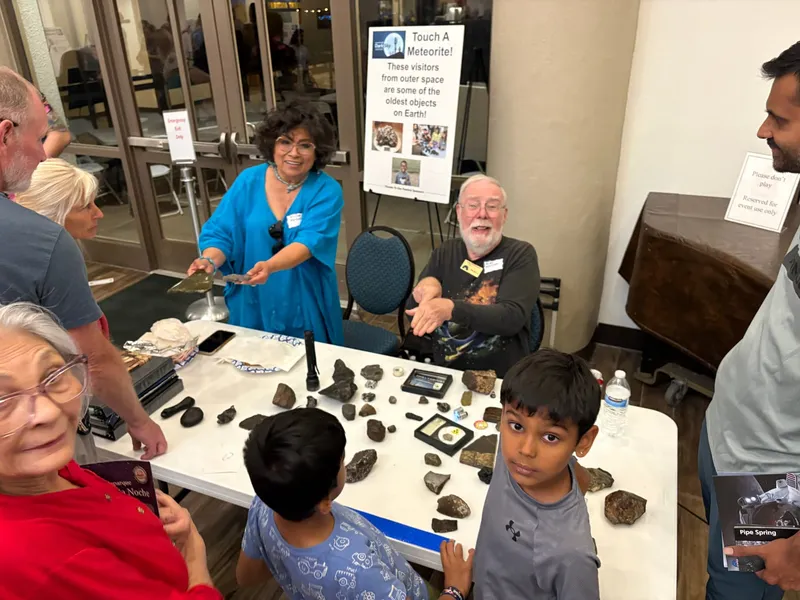
- Meteorite collection presentation
- Traveling the universe by telescope
- How to understand the night sky
- The mathematics of cosmological distances
- The history of our universe
Have you ever held a rock that floated through the solar system for billions of years? In addition to superb telescope viewing, PAS also brings large, stunning photos of deep sky objects from the Hubble and James Webb telescopes, along with a collection of meteorites found from locations around the globe. We encourage questions and conversation on any astronomical topic — come find out why the North Star never changes position, why the Moon is covered in impact craters while Earth has so few, and how new stars are born from the remnants of supernovae, leaving us all made of stardust. There's something for any age group.
Volunteer as an Operator
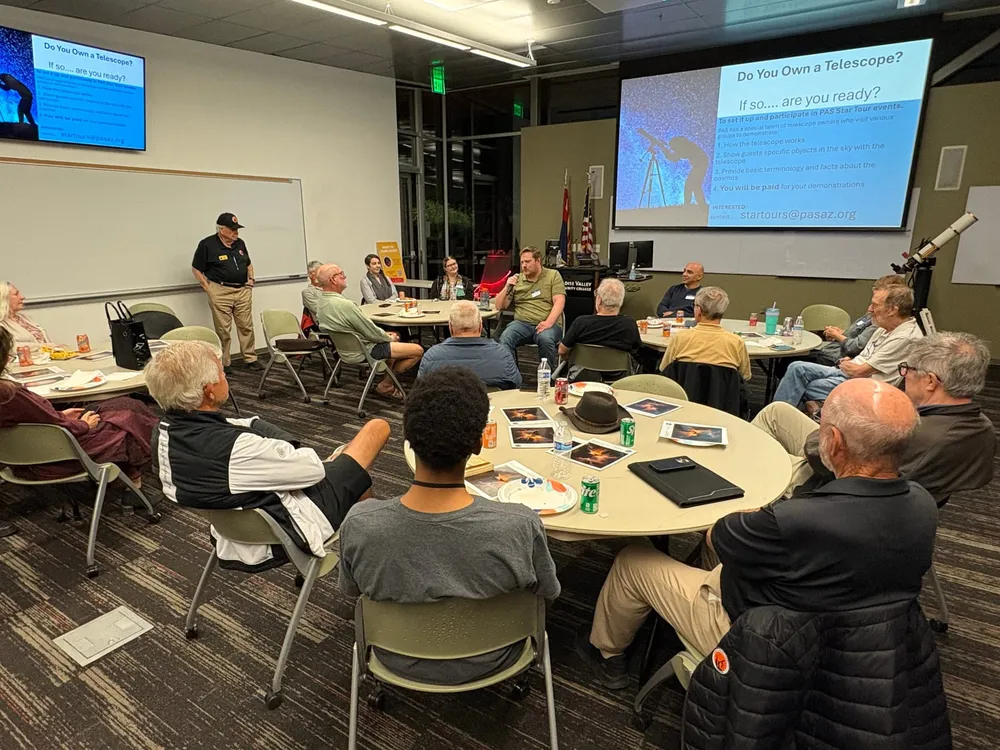
Do you own a telescope? PAS has a team of telescope owners who visit schools, scout troops, and community events to demonstrate how a telescope works, show guests specific objects in the sky, and share basic terminology and facts about the cosmos — and operators are paid for their demonstrations.
Book an Event
If your organization, business, school, or scout troop is interested in scheduling a private event, send us the details below and we'll follow up to confirm availability and pricing.
Not booking a tour? Use our general contact form for anything else.